
01 · The problem
Plastic pollution
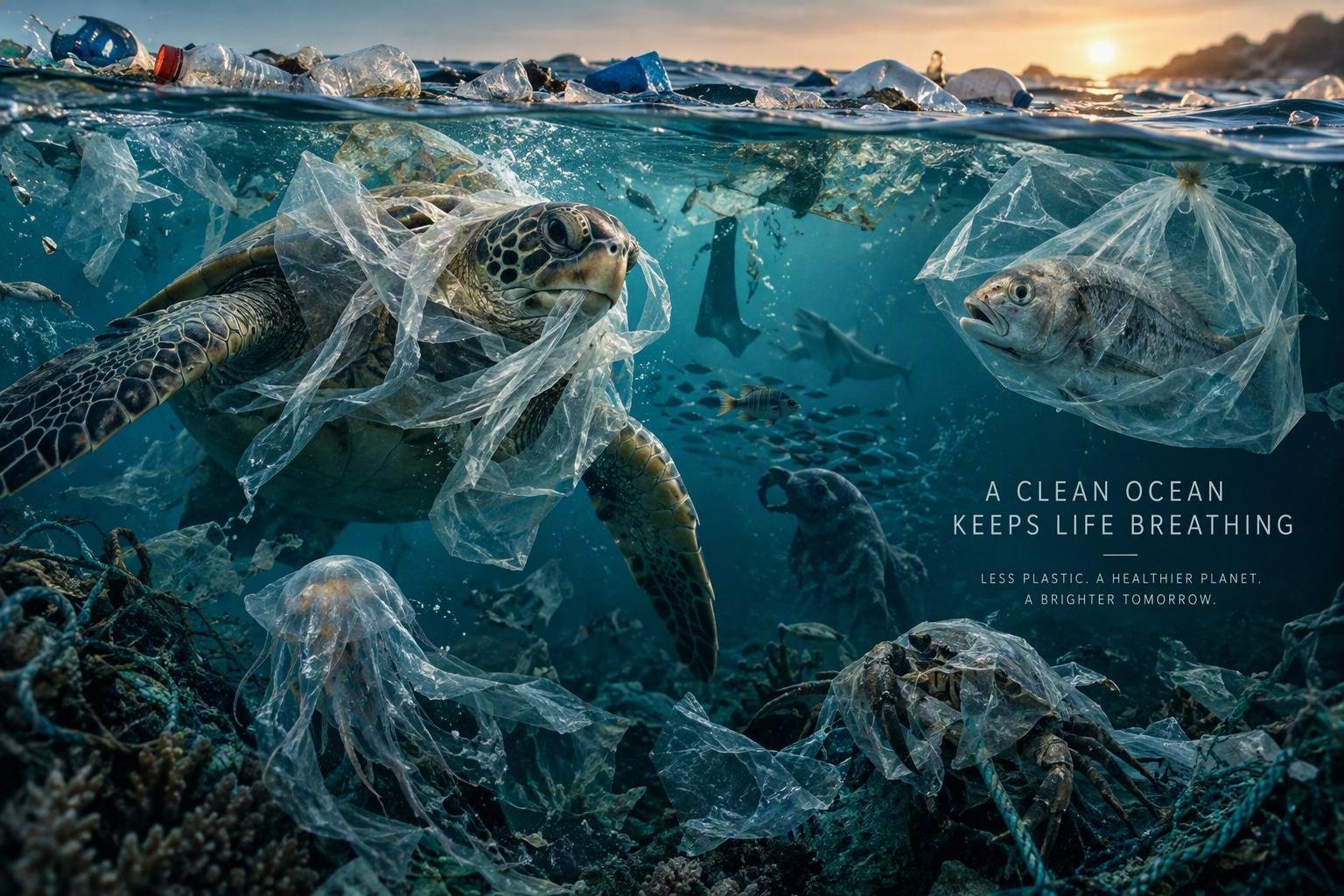
Single-use plastic has created a large global waste challenge. Much of it is used for minutes and persists for far longer, and a significant share is not collected or recycled.
Plastic waste is reaching
- Rivers
- Oceans
- Lakes
- Soil
- Landfills
- Food chains

02 · The consequences
Wildlife and habitats
Marine animals, birds, fish and turtles can become entangled in plastic or mistake it for food. Rivers, coastlines, forests and other habitats carry the waste that escapes collection. The effects reach well beyond the places where plastic is used.
03 · What research is examining
Microplastics
As plastic breaks down, it forms smaller particles. Microplastics are increasingly being detected across environmental systems.
- Water
- Soil
- Air
- Food chains
Growing scientific research has raised concerns about human exposure to microplastics and certain chemicals associated with plastics. Reducing unnecessary single-use plastic is one practical step toward reducing plastic pollution and potential exposure.
The science on health effects is still developing. We don't make medical claims about plastic or about our products.
04 · The opportunity
Small Choices. Larger Impact.
Every meal creates a choice.
Every package creates a choice.
Every business creates a choice.
And millions of everyday choices can shape the world we leave behind.
Better alternatives already exist for many everyday items. When a restaurant, caterer or retailer switches its plates, containers or bags, that single decision repeats with every order. Our role is to make that switch easier to source.
05 · The material
From Sugarcane to Table
-
01Sugarcane cultivation
Sugarcane is grown widely in India as a food crop.
-
02Sugar extraction
Harvested cane is crushed to extract juice for sugar production.
-
03Bagasse
The dry, fibrous residue left behind is an agricultural by-product, often burned or discarded.
-
04Processing
The fibre is cleaned and turned into pulp.
-
05Moulding
Pulp is heat-pressed in moulds to form plates, bowls, trays and containers.
-
06Finished tableware
Products are trimmed, inspected and packed to specification.
-
07Foodservice
Used in restaurants, catering, takeaway, delivery and events.
-
08Responsible end-of-life
Depending on the product and local facilities, this may include industrial or home composting where certified, or other appropriate waste streams.
Our position on end-of-life claims
Not every bagasse product will compost in every environment. Breakdown depends on the specific product, any coatings, its certification and the waste infrastructure available locally. Compostability is a certified claim, and we only use it when the specific product carries supporting certification for your market.
Sources & further reading
- UNEP, From Pollution to Solution: A global assessment of marine litter and plastic pollution (2021)
- OECD, Global Plastics Outlook (2022)
- World Health Organization, Dietary and inhalation exposure to nano- and microplastic particles and potential implications for human health (2022)
- This page summarises public research for general awareness. It is not scientific or medical advice. Sources should be reviewed and updated before publication.